Google: Generative AI optimization guidance (opens in a new tab)
Useful original content, technical accessibility, and clear information remain the foundation. There is no special AI markup or required llms.txt file for Google Search.
GEO services / AI search visibility
Understand how buyers find your business in AI-assisted research. RID Marketing investigates the questions they ask, checks the answers and sources they encounter, and turns the gaps into useful website content and technical priorities.
Inside the work / AST
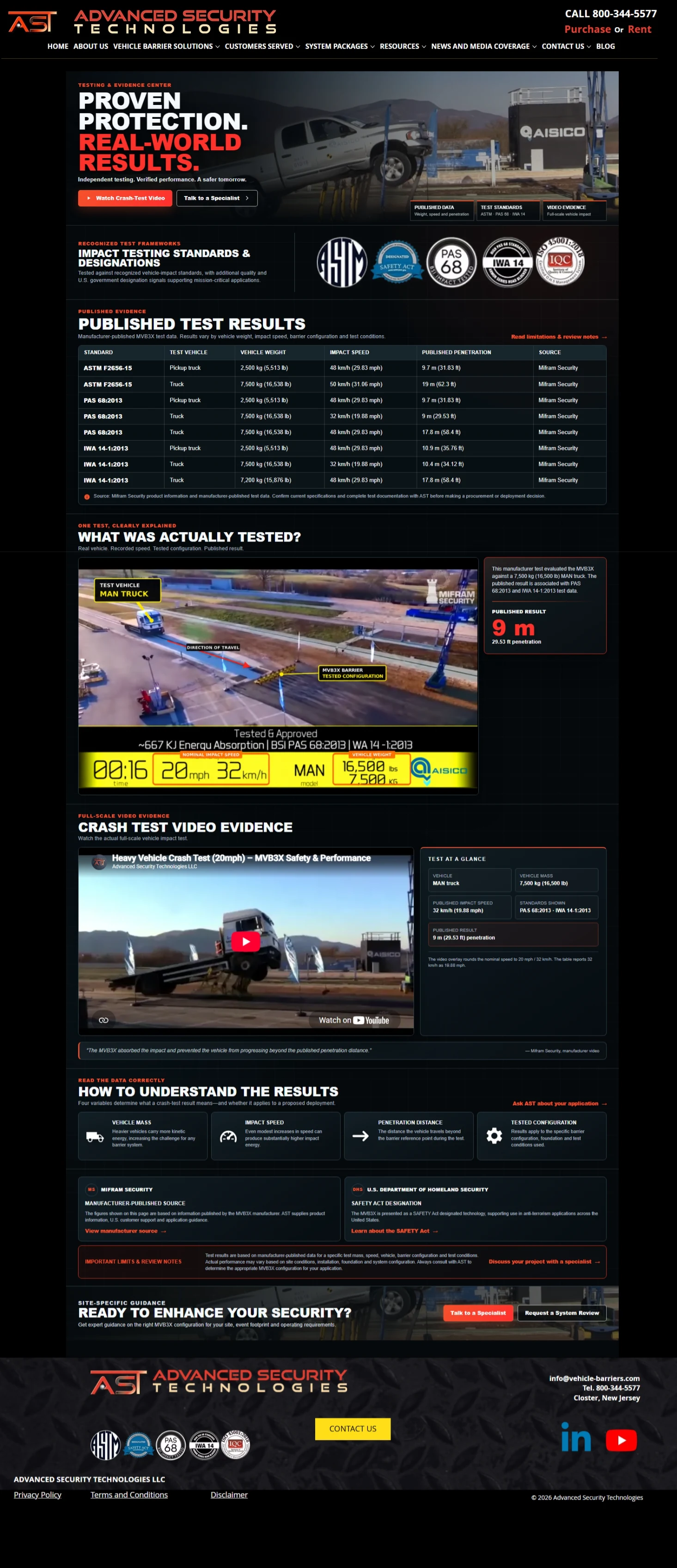
AST sells vehicle barriers. Buyers need evidence about testing and deployment before they can choose one.
Illustrative wording based on the published research themes, not a verbatim benchmark question.
AST appeared in one of 25 tracked questions in the September 2026 baseline. That finding applies to the defined question set.
RID planned six resources and built an initial Testing & Evidence Center on the existing Wix site. The draft brings standards, results, video, and explanation into one reading path.
Documented status AST approved the roadmap; the initial build was delivered for technical review. Follow-up visibility measurement was still planned.
Explore the AST engagementThe work, made clear
Generative engine optimization (GEO) helps make your business information easier to find, understand, and reference in AI-assisted research. Start with the questions buyers actually ask.
Talk about GEOStart with the priorities that matter to your business. We agree which of these deliverables you need and who will implement each change.
Agree on buyer questions, priority services, markets, and AI search experiences to review. Check how your business is described and which pages are cited.
You receiveA question register and dated observation log with platform, prompt, context, mentions, cited URLs, and saved response evidence.
Review crawl access, indexability, internal links, visible service information, and structured data on the agreed pages. Flag inaccurate or conflicting business details.
You receiveA URL-level issue list with supporting evidence, recommended fixes, priority, and an owner for each action.
Map gaps around service fit, process, comparisons, limitations, and proof. Turn approved business expertise into briefs or page revisions within the agreed scope.
You receiveA question-to-page map, content briefs or revised copy, and an evidence checklist identifying claims that need your verification.
Recheck the agreed questions and record completed changes. Review available referral and inquiry data alongside what the AI responses show.
You receiveA comparison report with dated examples, linked citations, an implementation log, measurement limits, and the next priorities.
Before we begin
If the site is inaccessible, core service information is missing, or nobody can implement changes, start with that foundation. If you need immediate inquiries, discuss paid search alongside the longer-term work. Guaranteed AI recommendations are not a service we offer.
Start with what you have. Share account access through invitations once the scope is agreed; no passwords are needed for the first conversation.
Process, cost & timing
Bring your website and the services you want customers to find. We can establish a starting point even if you do not yet have search reports.
Discuss your GEO prioritiesA branded answer can describe your company correctly while broader buying questions never surface it. We separate those checks, agree on a repeatable question set, and map missing answers to pages worth improving. Content then goes through your subject expert before publication.
Both depend on accessible pages and useful, accurate information. GEO adds a documented review of AI answers, business descriptions, and cited sources. If pages cannot be crawled or key service information is missing, those foundations come first; adding another label or markup does not solve them.
The number of services, markets, questions, platforms, and pages sets the research workload. Original evidence, expert review, copy production, and website access affect implementation. We agree on fees, responsibilities, and review frequency before starting; content approval and publication must happen before a meaningful follow-up comparison.
Progress you can inspect
Agree on the baseline and review schedule before work begins. Every report should make the source, period, and next decision clear.
Track mentions, linked citations, and factual accuracy separately. Save the prompt, platform, date, and available location or session context; outputs can change between checks.
Where Search Console has sufficient data, review its Generative AI performance report for impressions in AI Overviews and AI Mode. Compare the stated dates and pages; visibility in those features does not establish a visit, inquiry, or sale.
Record which issues were resolved and which pages were published or updated. Separate completed work from recommendations awaiting approval.
Review identifiable AI referrals and tracked inquiries where data is available. Missing referral data and visits without a click limit attribution; a mention alone does not establish a lead.
Put the approach in context
Separate accurate branded answers from discovery when buyers describe a problem without naming your company.
Supporting evidence
Official guidance explains the foundations of the approach. Your baseline, completed changes, and measured outcomes establish what happens for your business.
Useful original content, technical accessibility, and clear information remain the foundation. There is no special AI markup or required llms.txt file for Google Search.
Search Console reports impressions for AI Overviews and AI Mode in Google Search. These observations describe visibility in supported Google features, not all AI traffic or business outcomes.
Google’s guidance supports accessible pages, useful original content, descriptive titles, and relevant links. These are concrete foundations for the work, not proof of a particular client outcome.
A few remaining questions
No. AI platforms control their own responses, and outputs can vary by question, date, location, and user context. We work on the content, accessibility, and evidence we can influence and report the results with those limits.
Usually the right starting point is your existing website: clear services, accessible content, useful answers, and current business information. Google says its AI Search features do not require special schema or separate AI text files.
We agree on the platforms and search experiences at scoping, based on your buyers and what can be observed. The report names each platform and mode checked. Findings from Google’s AI features do not establish how another platform selects its answers.
Connected expertise
YOUR NEXT CHAPTER STARTS WITH A CONVERSATION.
15 minutes. Your business, your goals, and a clear next step.